 Aizaz

The AI Slop Economy: Who Fixes the Work AI Leaves Behind?
There's a company called Slopfix that charges $10,000 to clean up AI-generated code.
One week. Three senior engineers. Their job is to take an application someone has already built and make its codebase easier to understand and maintain.
I found that fascinating.
For years, we've been hearing that AI will make software development cheaper, automate entire workflows, and eventually eliminate the need for many of the people doing this work.
And yet, here we have a business charging thousands of dollars to clean up what AI helped create.
I don't think that means AI has failed.
But it raises a question I haven't been able to stop thinking about.
If AI is making work so much easier to produce, why are we creating new businesses around fixing, reviewing, and supervising that work?
The more I looked into it, the more I realized this wasn't limited to software development.
There's an entire economy beginning to form around the things AI still needs people to do.
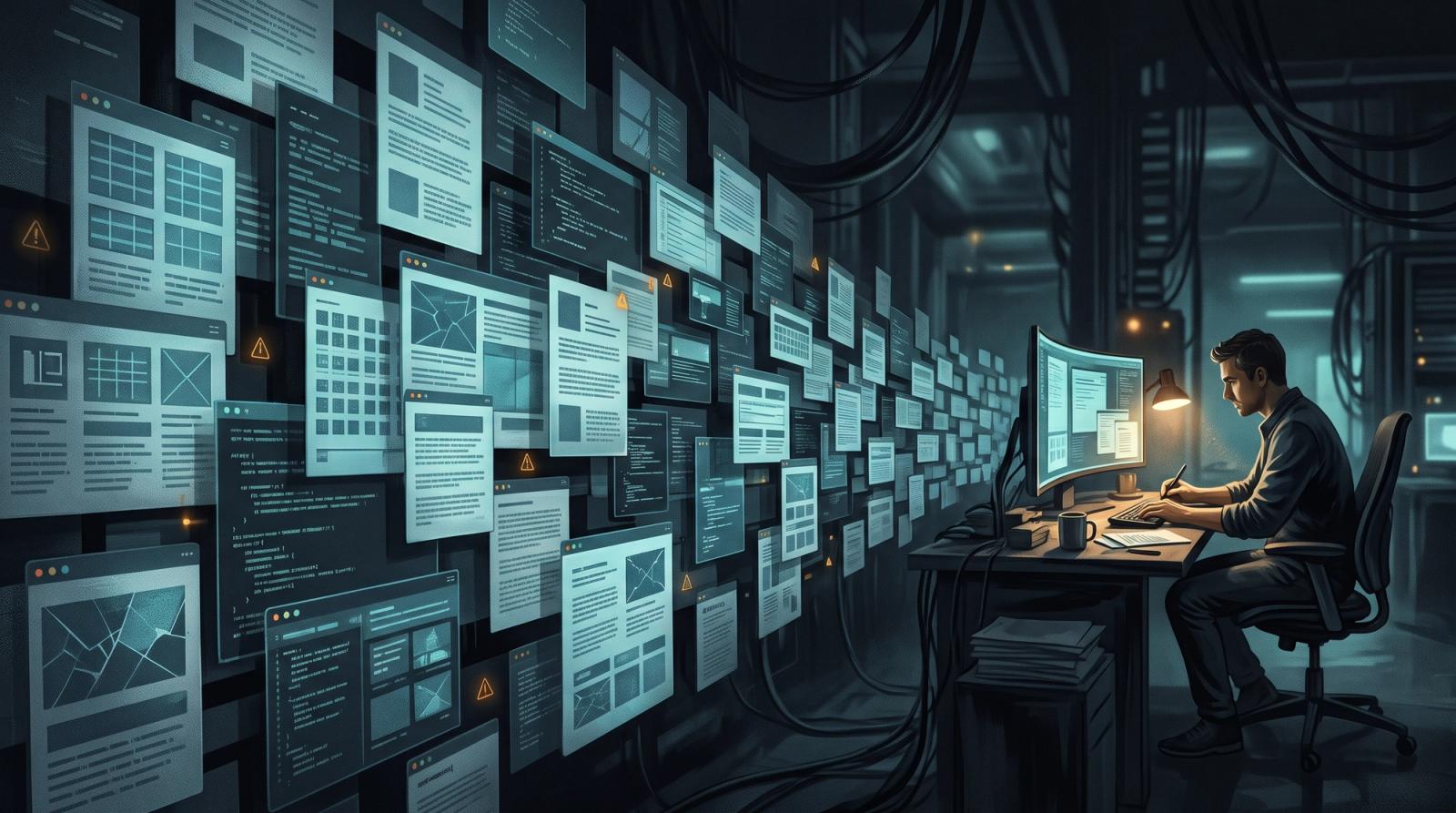
The problem with AI slop is that it often looks finished
When someone mentions AI slop, I usually think of those strange videos filling social media. AI-generated images, exaggerated voices, endless articles that say very little.
But I've started noticing a different version of it.
The kind that looks like actual work.
A beautifully formatted report that doesn't really answer the question.
An application that works perfectly during a demonstration but falls apart when someone tries using it properly.
An automation that handles everything correctly until something unexpected happens.
The strange thing is that the person producing this work might genuinely believe they've completed the task.
Someone else is left to figure out what went wrong.
In September 2025, BetterUp Labs and Stanford's Social Media Lab surveyed 1,150 full-time American desk workers about something they called workslop.
Their research on AI-generated busywork found that 40% of respondents had received AI-generated work that looked complete but created additional work for them during the previous month.
On average, respondents reported spending roughly two hours dealing with each incident.
That's survey data, not a measurement of every workplace. But it illustrates an interesting problem.
One person saves an hour generating something with AI.
Another person spends two hours trying to make sense of it.
On paper, productivity increased.
In practice, the work just moved somewhere else.
And once I started looking for examples of that happening, I found three particularly interesting markets.
1. The cleanup economy: getting paid to fix what AI builds
Let's go back to Slopfix.
Its website describes a service for people who have built applications with AI and reached a point where adding another feature causes problems elsewhere.
The team examines the existing application, identifies unnecessary complexity, and refactors the code while trying to preserve the functionality that already works.
Their advertised price is $10,000 for a week of work by three senior engineers.
That's a published offer, not evidence of how many customers they've served. But the fact that someone is offering this service tells us something about a problem people expect to pay to solve.
And I can understand why.
Tools like Cursor, Claude Code, Lovable, and Bolt have made building software much more accessible.
A founder can create a functional prototype without hiring a development team. Someone with a good idea can test it in days instead of spending months trying to get the first version built.
I think that's a genuinely positive development.
The problem starts when people assume that because the application works, the engineering is finished.
What happens when the same logic exists in five different places?
What happens when every new feature breaks something unrelated?
What happens when the person who built the application doesn't understand why a particular piece of code exists?
And what happens when real customers start depending on it?
There's some interesting research here, too.
A 2026 NBER working paper studied more than 500,000 GitHub developers to understand how different generations of AI coding tools affected productivity.
For autonomous coding agents, the researchers estimated a cumulative 240% increase in commits, a measure of coding activity.
But the corresponding increase in actual software releases was only 30%.
Those numbers measure different outcomes. They don't mean that 70% of AI-generated code is unusable.
What they suggest is that increasing the amount of code produced doesn't automatically increase the amount of finished software by the same proportion.
There's still work between generating code and releasing a product.
Testing. Reviewing. Debugging. Understanding how everything fits together.
And sometimes, removing unnecessary code.
This also connects to something I've written about before: whether AI has actually made software development cheaper.
I believe it has.
But the cost of producing code and the cost of delivering reliable software aren't the same thing.
I experienced a smaller version of this myself
Recently, I decided to automate part of our lead-generation process at Aizaz Studio.
The idea sounded ridiculously simple.
Find relevant businesses, research them, prepare personalized emails, and keep track of conversations.
Four steps.
I genuinely thought connecting a few tools would get us most of the way there.
Six hours later, I was still trying to work through problems I hadn't considered when I started.
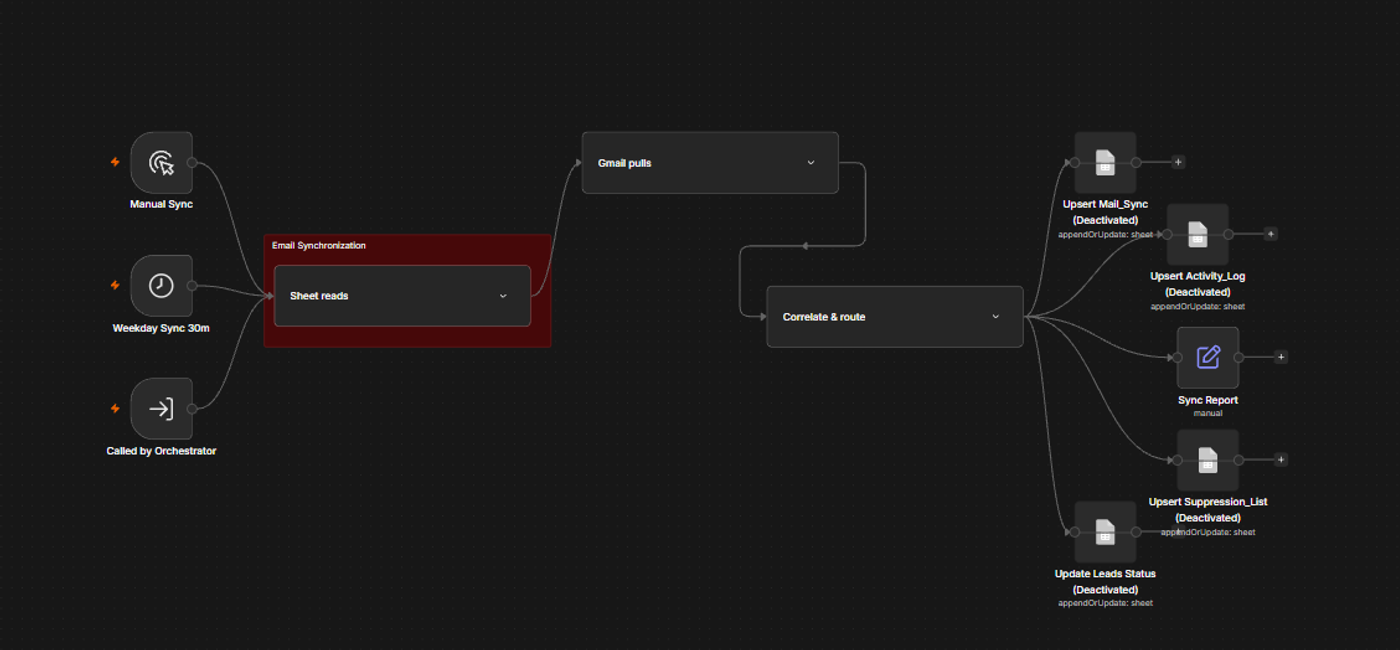
How do I prevent contacting the same person twice?
What happens if the information we find is incomplete?
How do I make sure an automated follow-up doesn't go out after someone has already replied?
What happens when one part of the process fails but the others continue?
AI was helping me throughout the process. It could explain errors, suggest configurations, and help build individual pieces.
But every time one problem was solved, I found another decision that needed to be made.
And at some point, I had to ask myself whether I'd made the solution more complicated than the original problem.
To be fair, those problems weren't all caused by AI. Integrating different services and making them reliable takes work regardless of how the automation is built.
But it made me appreciate the difference between having something that works once and having something you can trust to work repeatedly.
That distinction matters far more than it first appears.
We've also discussed why reliable business automation needs more than simply connecting a few tools. Experiencing those problems myself made the lesson much harder to ignore.
And software cleanup isn't the only place where human expertise is becoming valuable.
2. The teaching economy: why AI companies are paying experts
Here's another interesting development.
Companies building advanced AI models are paying doctors, lawyers, scientists, and other specialists to evaluate what those models produce.
Not just to write training material, but to identify subtle mistakes, create difficult problems, and judge whether an answer is actually correct.
Consider a legal question.
An AI model might generate a convincing explanation of a contract. The wording sounds professional. It references relevant concepts. Everything seems reasonable.
But determining whether the interpretation is legally defensible requires someone who understands the subject.
The same problem appears in medicine.
A model can explain a patient's symptoms, but assessing whether its reasoning is clinically appropriate involves much more than generating a plausible paragraph.
That's where companies like Mercor come in.
Mercor connects specialists with AI training and evaluation projects.
Its legal expert opportunities advertise roles involving legal reasoning, evaluating AI responses, and creating challenging examples, with some listed rates reaching $150 or more per hour.
Its healthcare opportunities similarly recruit medical professionals to assess clinical reasoning and evaluate AI-generated responses.
These are advertised opportunities, not guaranteed earnings for everyone who applies.
Still, the underlying business is interesting.
We're building systems capable of producing increasingly sophisticated answers.
And we're paying highly qualified people to determine whether those answers deserve to be trusted.
I wouldn't go as far as claiming AI companies have completely run out of useful training data. That's a much broader argument.
But there's clearly demand for expert judgment that cannot be replaced by simply generating more text.
The valuable work isn't necessarily producing the first answer anymore.
Sometimes it's knowing why the first answer is wrong.
3. The supervision economy: when automation still needs a human
One of the most interesting examples comes from Klarna.
The financial technology company became a major talking point in the AI employment debate after introducing an AI-powered customer-service assistant.
And by Klarna's own account, the technology has been commercially useful.
In its 2025 annual filing, Klarna reported that its AI assistant handled 80% of customer-service chats during the year, without a decline in customer satisfaction according to its internal surveys.
That's substantial automation.
But in 2025, Klarna's leadership also discussed bringing human support back into greater focus and making human interaction available as part of the customer experience.
I find both parts of that story important.
If we only focus on the automation numbers, we miss why customers might still want a person.
If we only focus on the return of human support, we ignore the substantial cost savings Klarna reported.
Both can be true.
An AI assistant might handle thousands of routine questions efficiently.
But what happens when a customer has an unusual payment dispute?
What happens when the situation falls outside the expected process?
What happens when the customer simply needs someone who can understand the circumstances and make a decision?
These are different problems from answering frequently asked questions.
They require judgment, authority, and sometimes accountability.
And that raises another question.
As more routine work gets automated, does the remaining human work become more complicated?
I suspect that in many roles, it will.
The person supervising an AI system may need to understand the technology, recognize failures, evaluate exceptions, and know when to intervene.
But it's important not to exaggerate what these examples prove.
They don't establish that everyone displaced by automation is being rehired at a higher salary.
They show that even successful automation can leave important work for humans.
What happens when AI gets 88% of the work right?
Let's imagine a business deploys an AI agent.
The agent completes 88% of its assigned tasks successfully.
That's a hypothetical figure, not a general benchmark for AI agents.
Would I consider that successful?
In many situations, absolutely.
If the agent handles thousands of repetitive tasks and saves the team significant time, there's real value in that.
But I'd want to understand what happens to the remaining 12%.
Does the system recognize when it fails?
Does it send uncertain cases to someone who can resolve them?
Or does a person need to review every result to figure out which ones were wrong?
Those are three very different operating models.
And they have very different costs.
An agent that successfully handles routine document sorting might be excellent.
but the percentage alone doesn't tell us enough.
We need to understand the consequences of failure, the cost of checking results, and the amount of human intervention still required.
Sometimes those costs are relatively small.
Other times, they determine whether the automation makes business sense at all.
Which brings me back to the question I started with.
What does it actually cost to finish the work AI produces?
Has the AI takeover backfired?
I don't think these examples are enough to say that.
AI is genuinely changing the job market. Some tasks are being automated, and some businesses are reducing their reliance on human workers.
It would be misleading to pretend otherwise.
But I also don't think the story is as simple as machines replacing people.
We're seeing paid work emerge around AI-generated code cleanup, expert model evaluation, and supervision of automated systems.
That doesn't prove AI is creating more jobs than it's eliminating overall. We'd need much broader employment data to make that claim.
What it does suggest is that the kind of human work being valued is changing.
When generating a first draft becomes easy, knowing whether it's any good becomes more important.
When creating software becomes faster, understanding its architecture and maintaining it becomes more valuable.
When routine interactions can be automated, the unusual cases become a larger share of what people handle.
And when an automated system starts making decisions, somebody needs to decide what happens when it gets those decisions wrong.
I don't think we should be afraid of that future.
At Aizaz Studio, we use AI in our own work, and I wouldn't want to go back to working without it.
We've even started focusing specifically on helping people review and rescue applications built using AI, because producing the first version is no longer always the hardest part.
It allows a small team to get more done, explore ideas faster, and take on projects that would previously have required considerably more time.
We've even started focusing specifically on helping people review and rescue applications built using AI, because producing the first version is no longer always the hardest part.
But I think we need to be more careful about how we measure success.
Maybe the question shouldn't be how much work AI can generate.
Maybe it should be how much work AI can finish, how reliably it can finish it, and how much human effort is still required afterward.
Because the work that remains doesn't disappear just because the first 88% became easier.
Somebody still has to take responsibility for the outcome.
And increasingly, people are building entire businesses around doing exactly that.
This article was partly inspired by Pooja Dutt's documentary, The AI Takeover Has Completely Backfired, which explores the cleanup, teaching, and supervision economies emerging around AI. I recommend watching it for another perspective on the changing relationship between automation and human work.